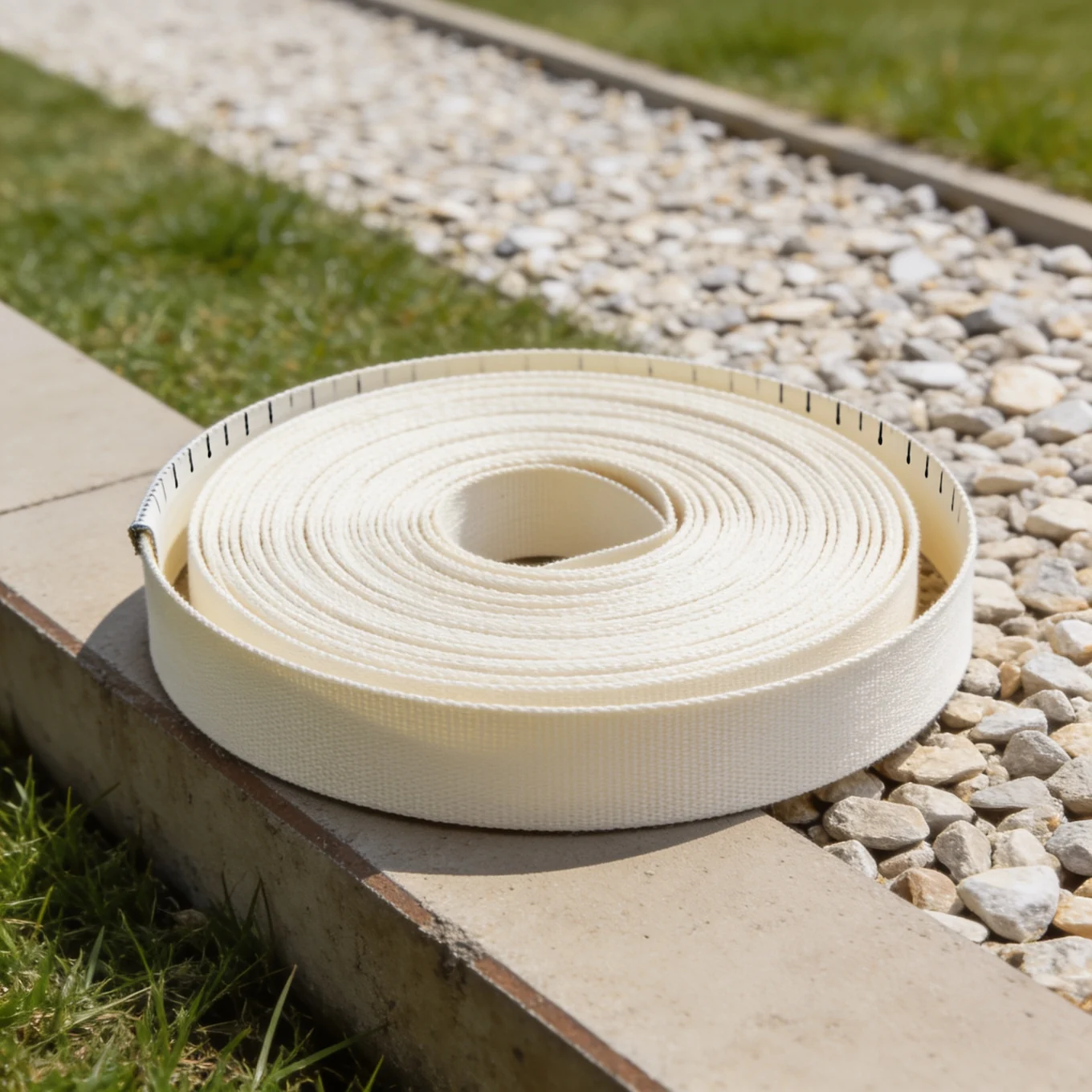
Draw the ground you intend to sow.
Measure lengths in metres. Divide an irregular lawn into smaller rectangles and multiply length by width for each. Add the areas, then subtract beds, paving and any ground you are not sowing. Do not use a property’s total area as lawn area. If measurements are in another unit, convert them consistently before using the square-metre calculator.
Keep composition separate from quantity.
Sunny Yard contains 70% tall fescue and 30% perennial ryegrass by weight. Dappled Shade contains 60% creeping red fescue, 25% chewings fescue and 15% perennial ryegrass. Those proportions distinguish the seed records; they do not prove how a particular lot will germinate or establish on your soil. Record observed light conditions and read the actual supplied lot information.
Multiply by the stated planning rate.
For Sunny Yard, 20 m² × 30 g/m² = 600 g. Its net 1 kg pack contains 1,000 g, so that arithmetic rounds to one pack. Repair Patch has a 500 g mass and a 35 g/m² planning rate: the same measured 20 m² gives 700 g and rounds to two packs. Pack dimensions describe packaging, not lawn coverage.
Know what the calculation leaves out.
The calculator does not model germination, sowing loss, purity, cultivar, slope, drainage, weather or the seedbed. It is not a prescription to use excess seed. Follow the actual lot instructions and obtain site-specific advice when needed. Keep the result and the chosen SKU together if you ask a quantity question.
Compare every species record → · Ask a measurement question →